

Equipment Financing Support
Equipment Financing Business Plan
Lender-Ready Business Plans for Equipment Purchases and Financing
Looking to finance machinery, vehicles, technology, or other essential business equipment? Mikel Consulting prepares professional business plans that clearly present your financing request, equipment needs, use of funds, business strategy, financial outlook, and repayment capacity. Whether you are launching, replacing aging assets, increasing production, or expanding operations, we can help you build a strong lender-ready financing package.
Built to Support Equipment Financing Applications
Includes:
- Equipment financing-ready business plan
- Financing request and equipment use of funds
- Financial projections and repayment analysis
- U.S. market research and operating strategy
Equipment Financing Overview
What is Equipment Financing?
Equipment financing allows businesses to acquire the machinery, vehicles, technology, tools, and other productive assets needed to operate or grow without paying the entire purchase price upfront. Financing is typically structured around the equipment being purchased, with lenders evaluating the business, asset value, financing request, cash flow, and ability to repay.
Mikel Consulting Record of Success
Trusted by entrepreneurs, established businesses, and growing companies seeking financing
Equipment Financing Supported
What Are Equipment Financing Loans?
Equipment financing loans provide businesses with capital to purchase or refinance qualifying business equipment. Depending on the lender and financing structure, the equipment itself may serve as collateral for the financing.
Who Is Equipment Financing For?
Equipment financing can support startups and established businesses that need machinery, vehicles, technology, tools, or specialized assets to launch operations, replace aging equipment, increase capacity, improve efficiency, or expand into new markets.
Why Does the Business Plan Matter?
A strong equipment financing business plan helps explain why the equipment is needed, how it will contribute to revenue and operations, how the financing will be repaid, and why the investment strengthens the overall business.
Equipment Financing Guidelines
Understanding Equipment Financing for U.S. Businesses
Equipment financing allows businesses to spread the cost of machinery, vehicles, technology, and other productive assets over time rather than paying the full purchase price upfront. Financing structures, rates, down payments, terms, and underwriting requirements vary by lender, borrower profile, equipment type, asset value, and the expected useful life of the equipment.
Financing Overview
How Equipment Financing Typically Works
Equipment financing can support businesses purchasing machinery, commercial vehicles, construction equipment, medical equipment, restaurant equipment, manufacturing systems, technology, and other assets required to operate or expand. The equipment being financed often serves as collateral, helping lenders structure financing around the value and useful life of the underlying asset.
Eligible Businesses
Equipment financing is available to businesses across a wide range of industries. Eligibility depends on the lender and may consider time in business, revenue, profitability, credit history, cash flow, existing debt, equipment value, and the borrower's ability to support repayment.
Financing Amount
There is no single maximum financing amount across the equipment lending market. Loan size depends on the lender, equipment cost, borrower qualifications, collateral value, down payment, and financing structure. Requests can range from smaller equipment purchases to multimillion-dollar machinery and fleet investments.
Equipment That Can Be Financed
Financing may support new or used machinery, commercial vehicles, construction equipment, manufacturing systems, medical and dental equipment, restaurant equipment, agricultural equipment, computers, technology, specialized tools, and other revenue-producing business assets.
Loans vs. Equipment Leases
Businesses may finance equipment through a traditional equipment loan or through a lease. With a loan, the business generally purchases the asset and repays the financing over time. Leasing can provide access to equipment without an immediate full purchase and may offer different ownership, payment, and end-of-term options.
Business Plan Requirements
For larger purchases, startups, expansions, or financing requests requiring additional underwriting, lenders may request a business plan explaining the company, equipment purchase, business need, expected operational impact, market opportunity, financial projections, and repayment capacity.
Rates, Terms & Down Payments
Interest rates, repayment terms, down payments, fees, and collateral requirements vary significantly by lender and transaction. Factors commonly considered include credit quality, business performance, equipment age and value, useful life, financing amount, and the overall strength of the borrower.
Financing Sources
Where Can Businesses Obtain Equipment Financing?
U.S. businesses can access equipment financing through several types of financial institutions and specialty financing providers. The right option depends on the equipment being purchased, financing amount, business history, credit profile, required funding speed, and preferred ownership structure.
Equipment financing terms and documentation requirements vary by provider. Mikel Consulting helps prepare the business plan, financial projections, financing request, equipment justification, and repayment narrative needed to present a professional lender-ready application.
Explore Bank Loan Business Plans →Service Details
Equipment Financing Business Plan Delivery Details
Sample Document Preview
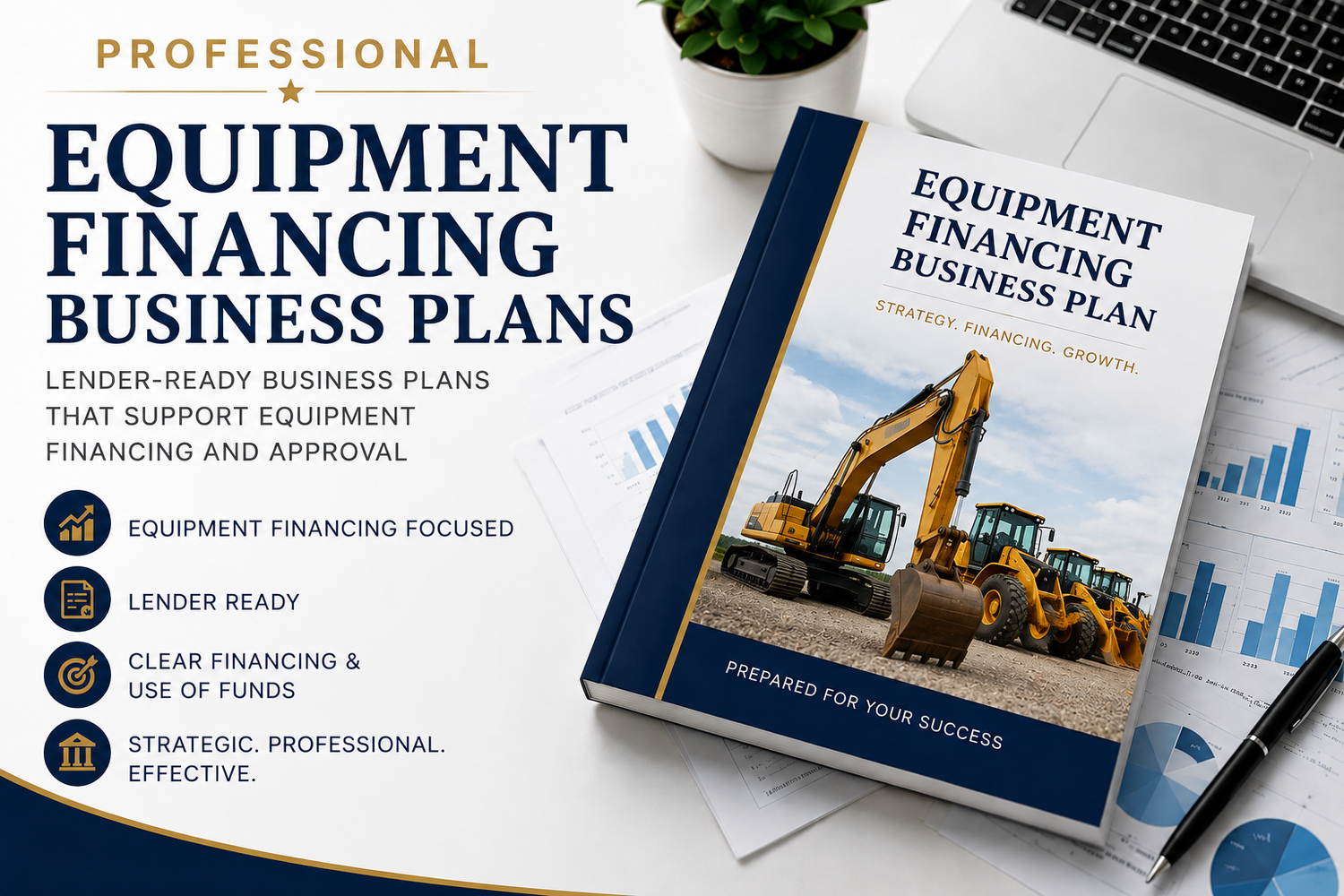
Professional, Lender-Ready Formatting
Equipment financing business plans can include written strategy, U.S. market research, equipment purchase details, financing request and use of funds, repayment-focused financial projections, charts, operating assumptions, and a clear explanation of how the equipment supports business performance and growth.
Our Process
How Our Equipment Financing Business Plan Process Works
Intro Call or Email
We discuss your business, Microloan purpose, intermediary lender needs, and timeline.
Engagement
You receive a contract, make payment, and complete the intake form.
Information Review
We review your business, use of funds, loan objectives, and financial inputs.
Plan Drafted
We prepare the plan, funding request, use of funds, market research, and forecast.
Review & Revisions
You review the draft and we refine the document for intermediary lender review.
Final Delivery
You receive polished PDF and editable files ready for lenders.
Why Mikel Consulting
Why Work With Mikel Consulting for Your Equipment Financing Business Plan?
We help U.S. businesses prepare professional business plans that clearly present the equipment purchase, financing request, business need, operating impact, financial outlook, and repayment capacity for lender review.
Equipment-Focused Planning
We structure the plan around the equipment purchase, financing purpose, asset requirements, business strategy, market opportunity, and expected operational impact.
Built for Lender Review
We prepare the document in a clear lender-facing format so financing providers can quickly understand the business, equipment request, assumptions, financial position, and repayment plan.
Clear Financing Request
We explain what equipment is being purchased, how much financing is required, how the funds will be used, and why the investment is important to the company’s operations and growth.
Financial Forecasting Support
We prepare projections that connect revenue, expenses, cash flow, equipment costs, debt service, and the expected financial impact of the equipment investment.
Sample Business Plans
See What a Professional Equipment Financing Business Plan Can Look Like
Business Plan Sample
Restaurant Concept
See how a restaurant business plan can present the concept, market opportunity, operating model, equipment needs, funding request, use of funds, and repayment capacity in a clear lender-ready format.
View Sample PDF →Expansion Plan Sample
Pilates Studio
Review an expansion example showing how growth plans, equipment requirements, local demand, startup costs, operating assumptions, and projected performance can be structured for business financing applications.
View Sample PDF →More Examples
Browse Our Sample Library
View additional sample documents, including bank loan business plans, investor plans, pitch decks, financial models, and other funding-related examples.
Browse All Examples →Client Funding Outcomes
Real Clients. Real Financing Secured.
Explore selected client outcomes where Mikel Consulting supported loan business plans, financial projections, and lender-ready materials used in successful small business financing processes.
Explore Mikel Consulting's Success Cases →Equipment Financing Business Plan Support
Let’s Build Your Equipment Fninancing Business Plan
Complete the form and one of our senior consultants will review your inquiry within 24 hours. For time-sensitive business plan support, call or message us directly.
🔒 Your information is strictly confidential. We do not share your details with third parties.
Equipment Financing Business Plan FAQ
Frequently Asked Questions
What is equipment financing?
Equipment financing allows a business to acquire machinery, vehicles, technology, tools, and other productive assets without paying the full purchase price upfront. Financing may be structured as an equipment loan or lease, depending on the lender, equipment type, borrower profile, and preferred ownership structure.
Who can apply for equipment financing?
Startups and established businesses across many industries can apply for equipment financing. Lenders may consider factors such as time in business, revenue, profitability, credit history, cash flow, existing debt, equipment value, down payment, and the business's ability to repay the proposed financing.
How much equipment financing can a business obtain?
There is no single maximum financing amount across the equipment lending market. Available financing depends on the lender, equipment cost, asset value, borrower qualifications, financing structure, down payment, and repayment capacity. Financing can range from smaller equipment purchases to large machinery, fleet, or production-system investments.
What types of equipment can be financed?
Equipment financing may support machinery, commercial vehicles, construction equipment, manufacturing systems, medical and dental equipment, restaurant equipment, computers, technology, agricultural equipment, specialized tools, and other business assets used to operate or generate revenue.
What is the difference between an equipment loan and an equipment lease?
With an equipment loan, the business generally purchases the asset and repays the financing over time, with the equipment often serving as collateral. A lease allows the business to use the equipment in exchange for scheduled payments and may include different purchase, renewal, or return options at the end of the lease term.
Do I need a business plan for equipment financing?
Not every equipment financing transaction requires a full business plan, but lenders may request one for startups, larger purchases, expansion projects, or applications requiring additional underwriting. A professional plan helps explain the business, equipment need, financing request, operational impact, financial projections, and repayment capacity.
What should be included in an equipment financing business plan?
An equipment financing business plan should typically include a company overview, ownership and management background, products or services, market analysis, customer segments, competitive positioning, operating strategy, equipment requirements, financing request, detailed use of funds, financial projections, cash flow analysis, and repayment strategy.
What financial details do equipment lenders typically review?
Lenders may review historical and projected revenue, profitability, operating expenses, cash flow, existing debt, owner investment, equipment cost, down payment, collateral value, debt-service capacity, and the assumptions supporting the forecast. The financial information should demonstrate how the business expects to manage the proposed financing.
Can startups qualify for equipment financing?
Yes. Startups can pursue equipment financing, although underwriting may be more dependent on the owner's credit profile, experience, business plan, available equity, equipment value, projected cash flow, and overall strength of the proposed business. Requirements vary substantially by lender.
Does the equipment serve as collateral?
In many equipment financing transactions, the equipment being purchased serves as collateral for the loan. However, lenders may require additional guarantees, collateral, deposits, or other security depending on the borrower's financial profile, equipment type, and overall transaction risk.
What interest rates and repayment terms are available?
Rates and repayment terms vary significantly by lender and transaction. Pricing may depend on credit quality, time in business, financial performance, equipment age and value, financing amount, down payment, loan structure, and the expected useful life of the asset. Businesses should compare offers based on total financing cost rather than rate alone.
Can equipment financing also be obtained through SBA programs?
Yes. Eligible businesses may be able to finance equipment through SBA-backed programs such as SBA 7(a) or SBA 504 financing, depending on the transaction and program requirements. Businesses may also use conventional bank loans, credit unions, specialty equipment lenders, manufacturer financing, leasing companies, or alternative lenders.
How can Mikel Consulting help with an equipment financing business plan?
Mikel Consulting prepares lender-ready equipment financing business plans that clearly present the business model, equipment purchase, financing request, use of funds, market opportunity, operating strategy, financial projections, and repayment capacity in a professional format for lender review.
How quickly can Mikel Consulting prepare an equipment financing business plan?
Most equipment financing business plans are completed within 7-10 business days once we have the required information. Timing can vary depending on the complexity of the business, financing amount, equipment being purchased, research requirements, and financial information available.
Do you guarantee equipment financing approval?
No. We prepare professional business plans designed to support lender review, but we cannot guarantee financing approval. Decisions are made by the lender and depend on factors such as credit history, business performance, cash flow, collateral, equipment value, lender policies, and overall transaction risk.
How much does an equipment financing business plan cost?
Our equipment financing business plans start at $1,000 USD. This typically includes a professionally written business plan, U.S. market research, financial projections, equipment financing request, use of funds analysis, and delivery in PDF and editable formats. Most plans are approximately 30-40 pages and are completed within 7-10 business days.